
In 2025 the world of reading has never been more digital. E-readers can carry thousands of titles, AI can summarize entire libraries in seconds, and apps put audiobooks in our ears as we commute. Yet bookstores remain full, libraries still serve as cultural landmarks, and shelves of books continue to line homes and offices.
The paradox is striking. With so many faster, lighter, and smarter options available, why do physical books still matter? The answer lies not in technology alone but in trust, permanence, and identity.

The persistence of tangibility
There is something about holding a book that no screen has ever matched. The weight of the paper, the sound of a turning page, even the faint smell of print — these sensory cues connect us to memory in ways that digital devices cannot.
Research has supported this feeling. A Norwegian study found that readers who used paper remembered stories better than those who read on screens. Statista data also shows that print book sales remain steady worldwide, despite the rise of digital formats (Statista Global Book Market).
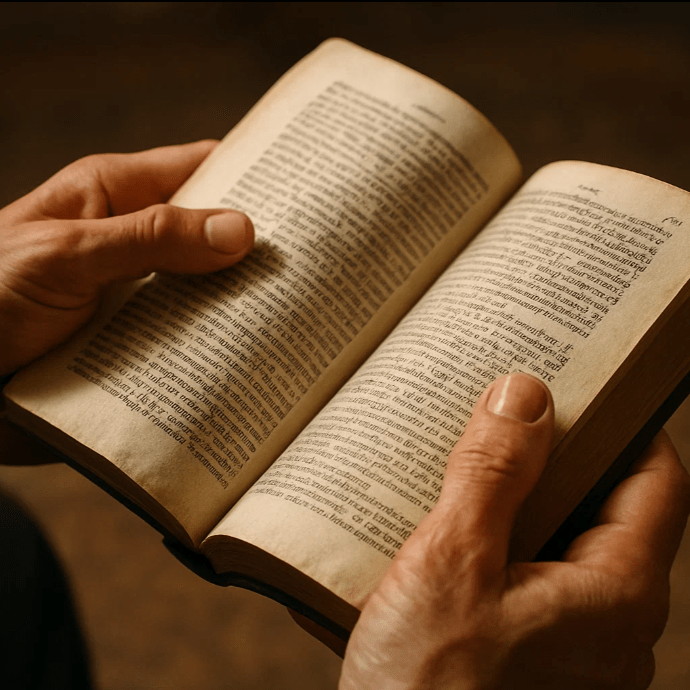
Physical books are not efficient compared to e-readers, but they are tangible. And in an era of fleeting feeds and endless scrolling, tangibility has value.
Trust and permanence
Digital is powerful but fragile. Subscriptions can expire. Apps can vanish. DRM can lock you out of what you thought you owned. Books on paper resist all of that. They do not crash. They do not require batteries. They do not disappear when a license ends.
That permanence creates trust. A book feels like a guarantee. In Trust is the New Currency in Tech Branding I argued that consumers are increasingly drawn to brands that make them feel secure. Physical books provide that same sense of safety. They are proof that knowledge can be preserved without depending on servers or subscriptions.
Libraries show this clearly. For centuries they have preserved cultural memory. Digital archives are vital, but formats evolve quickly. The printed page still carries the confidence of continuity.
Books as identity markers
A bookshelf is not just storage. It is a signal. The novels you display, the philosophy you collect, the dog-eared volumes you refuse to give away — all of these choices broadcast identity.
In Digital Tribes and Tech Branding I described how communities form around shared rituals and values. Bookshelves function in the same way. They are cultural markers that show who we are and who we want to belong to.
This became especially visible during the pandemic, when video calls turned private libraries into public backdrops. Books suddenly became part of personal branding, displayed not only for reading but also for signaling taste and belonging.

The community and ritual of bookstores
Bookstores are more than retail outlets. They are cultural spaces. Independent shops, secondhand sellers, and even major chains remain social anchors in many cities. Deloitte’s 2024 media outlook highlighted that physical book sales in key regions such as Europe and Asia have shown resilience, with independent bookstores reporting growth (Deloitte Media Outlook).
Visiting a bookstore is not the fastest way to get a book. It is the most human. Browsing aisles, flipping through pages, asking clerks for recommendations — these rituals keep reading grounded in community rather than consumption.
The limitations of digital
E-readers and apps have their strengths, but they also bring new problems.
Screen fatigue makes long sessions harder for many readers. Privacy concerns arise when platforms track what people read and how long they spend on each page. DRM restrictions mean that most digital books are rented, not truly owned.
Environmental debates are also complex. E-readers reduce paper but contribute to e-waste. In Sustainable Tech in 2025 I argued that responsibility in technology is not only about efficiency but also about lifecycle impact. Books printed on recycled paper with sustainable supply chains can, in some cases, rival the footprint of electronics.
AI knowledge engines vs deep reading
AI can answer questions instantly. It can summarize history, break down complex theories, or generate reading lists in seconds. Yet people still return to books for something AI cannot offer: depth.
Books are immersive. They slow us down. They create the conditions for critical thinking. OECD education studies have shown that long-form reading supports comprehension and reasoning in ways short bursts of digital information do not (OECD Education Research).
A book is not only about the information it contains. It is about the journey it takes the reader on. AI may tell you the answer. A book shows you how to think about it.
The hybrid future
Most readers today do not choose between print and digital. They use both. Kindles travel easily. Audiobooks fill commutes. Print anchors home reading. The future is hybrid, with each format serving a role.
A Statista report confirms this blended behavior, noting that many consumers now buy the same title in multiple formats — print for home, digital for mobility, audio for convenience. The book has evolved into a multi-format experience, but the printed version remains the cultural foundation.
Frequently Asked Questions
Why are physical books still popular in 2025?
Because they provide a tangible, trustworthy, and permanent reading experience that digital cannot replicate.
Are physical book sales growing?
Statista reports that global print sales remain stable and in some categories, such as fiction and children’s literature, are growing.
Do people learn better with print?
Yes. Studies show reading on paper supports stronger memory retention and deeper comprehension.
Will AI replace books?
AI is useful for quick answers, but books remain unmatched for immersive and critical reading.
What is the future of reading?
Hybrid. Readers in 2025 combine print, digital, and audio depending on context.
Closing reflection
Physical books endure not only because of nostalgia but because they offer permanence, identity, and belonging. In 2025 a printed book is more than paper and ink. It is a declaration of self, a safeguard of memory, and a ritual of culture.
Digital will continue to grow. AI will accelerate. But the book remains the reminder that reading is not just about information. It is about experience.
👉 If this reflection speaks to you, subscribe here and join me as I explore how culture, technology, and branding shape the choices we make in a digital age.
 safa.tech.blog
Leave a comment