
Not long ago a brand was a logo, a slogan, and a polished campaign. Companies spoke in their own voice and people listened. That structure feels outdated in 2025. The modern audience does not trust faceless institutions. They trust people.
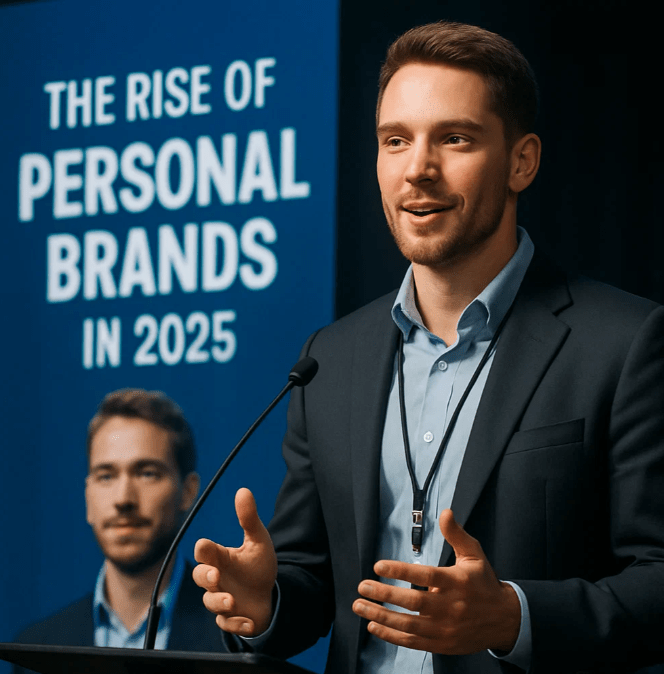
A founder’s story on stage, a creator’s posts on social, even an employee’s note on LinkedIn often carries more weight than any official campaign. Brand identity today is no longer just about design systems and guidelines. It is about people who feel real.
From logos to voices
This shift has been building for years. Edelman’s Trust Barometer has consistently found that people rank “a person like me” as more trustworthy than institutions. When audiences see a face, hear a story, or recognize a voice, they connect faster than they do with a corporate statement.
In my earlier essay on Digital Tribes, I described how communities gather around shared rituals and values rather than brands alone. The same pattern explains why personal branding is rising: trust flows more naturally through people than through symbols.

Personal brands as identity
Influencers and creators have shown that names and faces can become full brands on their own. A YouTuber’s channel, a podcaster’s voice, a founder’s Twitter feed these are not side projects. They are brand identities.
This matters because audiences are tired of manufactured messaging. In Trust is the New Currency in Tech Branding, I argued that the strongest value any brand can offer today is credibility. A personal brand is a shortcut to that credibility because it feels lived-in rather than scripted.
Employees as ambassadors
The most interesting development is that this is not only about influencers or CEOs. Regular employees now carry brand identity forward, often more effectively than official accounts.
LinkedIn has reported that posts from staff generate far more engagement than company pages. When an engineer shares their perspective on a new feature, or when a recruiter talks about the culture inside, people lean in. These voices feel authentic because they are not filtered through corporate messaging.
The same phenomenon is visible in esports, which I wrote about in The Future of Esports Marketing. Fans trust players more than teams. In branding, audiences trust employees more than companies.
Fragility and risk
Personal branding comes with risk. When a founder becomes the identity of a company, their missteps quickly spill over. When employees carry the narrative, their departure or misalignment can fracture the story.
This fragility is not new. In Why Physical Books Still Matter I explored how permanence itself carries cultural value. Personal brands feel powerful because they are human, but they can also feel unstable because humans are fallible.

A hybrid future
The strongest companies are finding a middle ground. They maintain the stability of an institutional brand while encouraging personal voices to flourish. The logo stays as a symbol, but it is animated by real people speaking in their own language.
Deloitte’s 2024 Future of Work insights noted that organizations with strong internal storytelling perform better in recruiting and retention. This is branding not as advertising, but as lived identity.
Brand identity in 2025 is no longer a monologue. It is a conversation carried by many voices.
Frequently Asked Questions
What is a personal brand in 2025?
It is the identity someone builds through their presence, voice, and story, often overlapping with the company they represent.
Why are personal brands important now?
Because people trust individuals more than corporations. Research shows audiences engage more with personal stories than official campaigns.
Can employees be brand ambassadors?
Yes. Staff posts often receive more attention and credibility than corporate accounts.
What are the risks of personal branding?
Over-reliance on individuals makes brands vulnerable if reputations change or employees leave.
What is the future of brand identity?
Hybrid. Logos provide continuity, but personal voices provide authenticity. The two must work together.
Closing reflection
Brand identity has shifted from polished logos to human voices. Founders, creators, and employees now carry trust in ways institutions cannot. This is not a passing trend. It is a reset in how audiences connect with brands.
The strongest stories in 2025 are not written by campaigns. They are told by people who feel real.
👉 If this perspective resonates, subscribe here to explore more essays on how culture, identity, and technology are reshaping branding in 2025.


Leave a reply to Apple’s M5 Revolution: 3nm Tech, and Modular Pro Power for MacBooks – safa.tech Cancel reply