In 2025 people are not only buying products. They are repeating rituals. The first sip of morning coffee, the monthly unboxing of a subscription box, the shared anticipation of a product launch stream — these moments are no longer just consumption. They are cultural patterns.
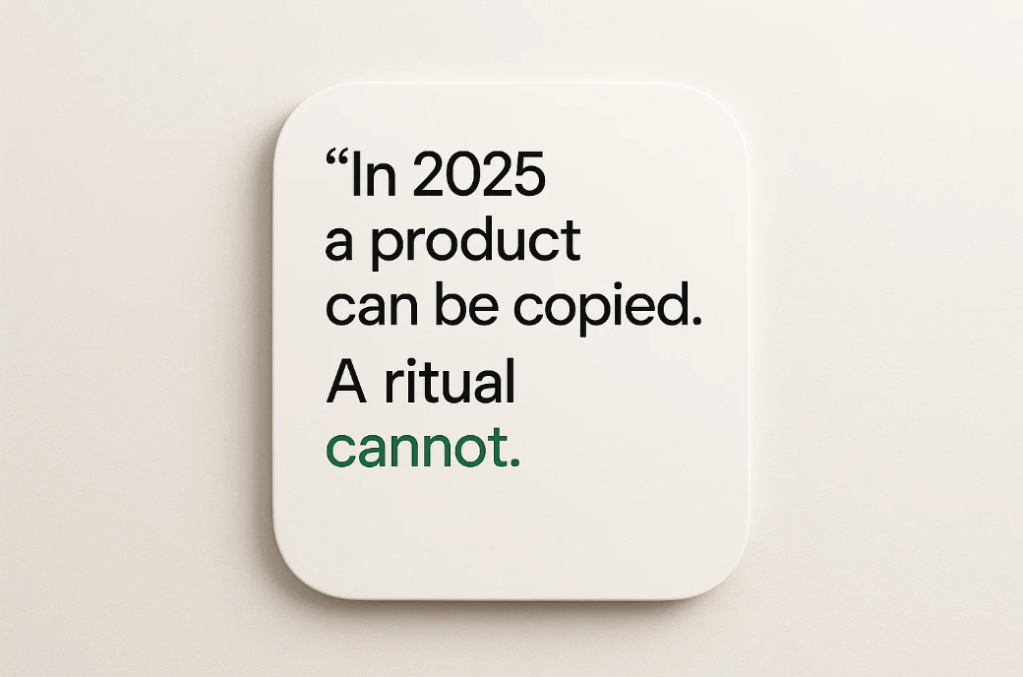
Rituals give consumers a sense of identity and belonging. They turn brands into companions rather than commodities. And while innovation still matters, it is ritual that anchors loyalty.
Rituals as belonging
The strongest brands today are not those that simply sell. They are those that stage rituals. Starbucks is not just about coffee. It is about the morning stop that marks the beginning of the day. Apple is not just about devices. It is about the collective pause every September when millions tune in to a keynote.
Rituals transform individual acts into community events. They say this is what we do together.
In my essay on Digital Tribes and Tech Branding I described how tribes form around shared values. Rituals are the heartbeat of those tribes. They provide rhythm and repetition, giving people ways to signal membership without words.
The psychology of habit
Rituals also work because they align with how human behavior forms. Habits create comfort. The Harvard Business Review has noted that repeated behavior, when tied to emotional cues, becomes part of identity. McKinsey’s consumer insights similarly point out that ritualized consumption drives retention at higher rates than transactional purchases (McKinsey Consumer Behavior).
This is why brands invest in rituals — not just for attention but for continuity. The unchanging act of peeling a coffee cup sleeve or opening a subscription box anchors the brand in memory.
Examples in 2025
Coffee as a ritual
Coffee brands thrive because they do not just sell drinks. They sell moments of pause and reset. The morning stop at a café is both practical and symbolic. It marks the shift from private to public life, from rest to work.
Launch events as collective ceremonies
Apple events, Samsung Galaxy launches, and even AI model announcements are treated like cultural ceremonies. These are not product drops. They are rituals where fans gather, speculate, and collectively react.
Esports as a ritual of play
In The Future of Esports Marketing I described how tournaments are not just entertainment. They are recurring rituals of belonging, where millions log in at the same time to share the same thrill. The repetition of annual finals or seasonal leagues is what makes them powerful.
The trust layer
Rituals work because they repeat. And repetition builds trust.
In Trust is the New Currency in Tech Branding I argued that trust is now the most valuable asset brands can hold. Rituals create reliability because they are predictable. A product may fail once, but a ritual keeps returning.
When brands stage rituals consistently, they give consumers confidence that the next experience will feel familiar. That predictability is what turns an audience into a loyal community.
Risks of forced rituals
But rituals are fragile. When staged without authenticity, they feel artificial. Consumers sense when an event is manufactured for marketing rather than culture.
Greenwashing campaigns that try to pass corporate moves off as community rituals backfire. Missed launch dates or broken supply chains can also fracture ritual trust. A ritual that fails once risks losing its magic permanently.
This fragility echoes the permanence debate I explored in Why Physical Books Still Matter. Rituals survive because they feel lasting. When they are interrupted, the illusion of permanence cracks.
The hybrid future of rituals
In 2025 brand rituals are becoming hybrid — blending physical and digital.
Subscription boxes mix online ordering with tangible monthly unboxing moments. Streaming platforms combine binge culture with scheduled live watch parties. Retail brands tie in-store visits with app-driven rewards.
Statista reports that consumer engagement with hybrid brand experiences has grown steadily since 2020, with subscription-based models leading the way (Statista Subscription Economy). Deloitte forecasts that by 2030 most consumer-facing brands will blend rituals across both physical and digital spaces (Deloitte Consumer Trends).
The future is not about choosing between formats. It is about weaving them together into rituals that feel consistent across every channel.
Frequently Asked Questions
What are brand rituals?
Brand rituals are repeated experiences that turn buying into belonging, such as morning coffee routines, launch events, or subscription unboxings.
Why do consumers follow brand rituals?
Because rituals create comfort, trust, and identity. They make consumption feel meaningful.
Which brands use rituals best in 2025?
Coffee brands, tech companies with launch events, and esports communities are leading examples.
Do rituals increase customer loyalty?
Yes. Studies show that rituals drive retention and engagement at higher rates than one-time purchases.
Can brand rituals fail?
Yes. If they feel forced, inauthentic, or are disrupted, rituals lose credibility quickly.
Closing reflection
In 2025 a product can be copied. A ritual cannot.
Rituals are what make brands feel alive. They transform everyday consumption into cultural experiences. They give people not only a reason to buy but a reason to belong.
The brands that will thrive are those that understand rituals are not just marketing tactics. They are cultural contracts.
👉 If this perspective speaks to you, subscribe here and join me as I explore how culture, technology, and branding shape the choices we make every day.

 safa.tech
Leave a comment