
In 2025 the marketplace is noisier than ever. New brands emerge daily, promising innovation, disruption, and reinvention. Yet when people make choices, they often reach for something familiar. The ketchup they grew up with. The office software they have used for years. The sneakers they have trusted season after season.
Familiarity is more than nostalgia. It is a quiet force in branding that lowers anxiety, builds trust, and keeps consumers loyal even when alternatives claim to be better. In an age obsessed with the new, familiarity is what feels safe.
The psychology of familiarity
Psychologists call it the mere exposure effect — the more often people see or use something, the more positively they feel about it. Familiarity creates comfort because it reduces uncertainty.
Pew Research has consistently shown that people lean toward technologies and products that feel known rather than untested (Pew Research on Consumer Trust). This explains why established brands maintain dominance in crowded markets.
In Trust is the New Currency in Tech Branding I argued that trust is now the deciding factor in brand loyalty. Familiarity is one of trust’s most reliable building blocks.
Reducing decision stress
Modern consumers face constant choice overload. From streaming services to grocery aisles, the options are overwhelming. Familiar brands simplify decisions. They act as mental shortcuts.
Statista reports that over 60 percent of consumers prefer to stick with familiar brands even if new options seem appealing (Statista Consumer Behavior). The logic is simple: choosing what you already know saves time, energy, and worry.
This explains why brands like Coca-Cola continue to thrive. No matter how many craft sodas enter the market, people still reach for the red can. Familiarity reduces decision stress.
Trust through repetition
Repetition builds credibility. Every time a brand shows up in a consistent way — whether through packaging, advertising, or product quality — it reinforces reliability.
Microsoft Office illustrates this power. New productivity tools constantly emerge, but Office remains the global default. Its familiarity reassures people that it will work across systems, workplaces, and decades of files.
In Why Many Linux Users Prefer ThinkPads I described how repetition and reliability created quiet loyalty. Familiarity works the same way. Brands earn trust not only through innovation but through consistency.
Surviving crises
Familiar brands often weather crises better than newcomers. When something goes wrong, consumers give known names more chances.
McKinsey notes that brand equity cushions the impact of mistakes — consumers are more forgiving toward brands with long-standing familiarity (McKinsey Consumer Trust).
Think of Nike. Despite controversies, its global familiarity and cultural presence keep it resilient. People are more likely to forgive what they already know than risk the unknown.
Examples in 2025
- Heinz → The ketchup bottle people instinctively grab.
- Microsoft Office → The work software that defines “default.”
- Nike → Sneakers that feel familiar across generations.
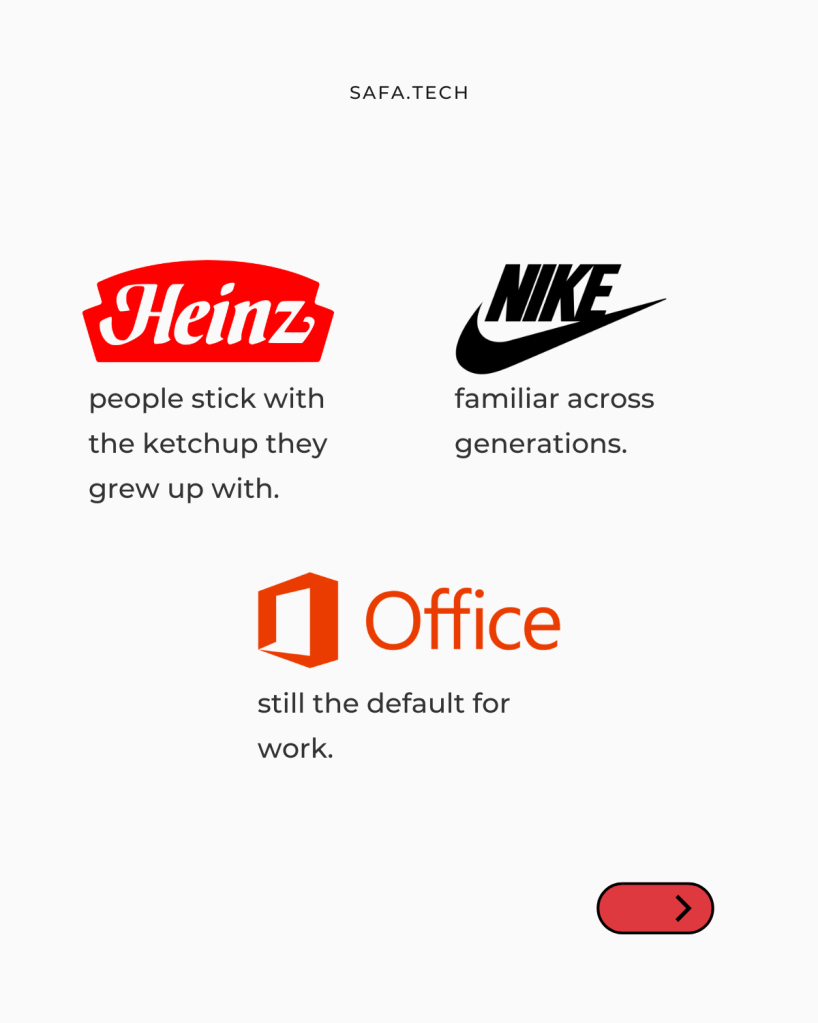
These brands succeed not because they are always the most innovative, but because they are always present.
The balance with innovation
Familiarity does not mean stagnation. The strongest brands combine the comfort of the known with small doses of innovation. They innovate within a familiar frame.
Apple’s annual launch events are an example. The ritual feels familiar — same stage, same flow — but each year brings incremental novelty. This balance keeps people engaged while preserving trust.
In Why Consumers Follow Brand Rituals in 2025 I explained how repetition creates cultural ceremonies. Familiarity works in the same way. It makes innovation believable by grounding it in what feels steady.
Frequently Asked Questions
Why is brand familiarity important in 2025?
Because brand familiarity reduces decision stress, builds trust, and creates loyalty in an overwhelming market.
Do consumers prefer familiarity over innovation?
Often yes. Research shows people lean toward familiar options even when new ones promise better features.
Which brands thrive on familiarity?
Heinz, Microsoft Office, Nike, and Coca-Cola are leading examples.
Does familiarity make brands boring?
Not necessarily. Familiarity provides comfort while innovation adds excitement. Together they create balance.
Can new brands compete with familiarity?
Yes, but they must build trust quickly through consistency, community, and clear identity.
Closing reflection
In 2025 familiarity is not the opposite of innovation. It is the foundation that makes innovation believable.
Consumers may be dazzled by the new, but when it comes to trust and loyalty, they return to what feels safe. Familiar brands provide continuity in a chaotic marketplace. They are the anchors people hold onto.
👉 If this reflection resonates, subscribe here and join me as I explore how culture, technology, and identity shape the future of branding.


Leave a reply to Apple M5 Launch: Unpacking Sky Blue Innovation, Performance Upgrades & What It Means for Bangladesh’s Power Users in 2025 – safa.tech Cancel reply